

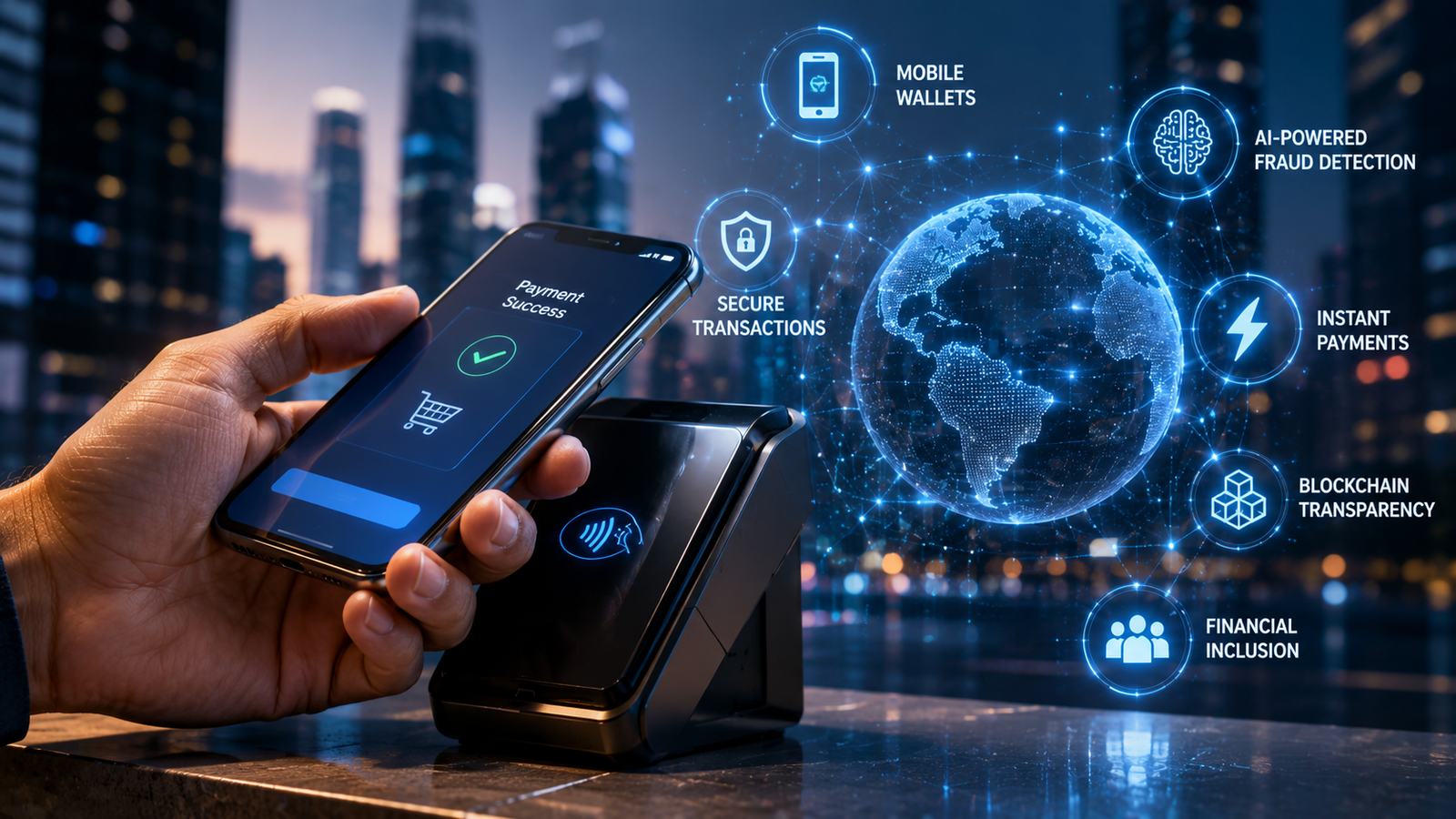
Explore how Digital Payments and financial technology are transforming transactions through mobile wallets, AI, blockchain, and secure payment solutions.
The Future of Digital Payments and Financial Technology
The way people pay for goods and services has changed dramatically over the past decade. Advances in financial technology have made transactions faster, more convenient, and increasingly secure. Digital Payments have become an essential part of everyday life, allowing consumers and businesses to complete transactions using smartphones, digital wallets, contactless cards, and online platforms.
As technology continues to evolve, digital payment systems are expected to play an even greater role in shaping the future of global commerce.
The Rise of Cashless Transactions
Consumers are increasingly choosing digital payment methods over cash. Mobile wallets, online banking, and contactless payment solutions provide greater convenience while reducing the need for physical currency.
The shift toward cashless economies continues to accelerate worldwide.
Mobile Wallet Adoption
Digital wallets allow users to store payment information securely and make purchases with smartphones, smartwatches, or other connected devices. Their convenience and speed have made them popular among consumers and businesses alike.
Mobile wallets remain one of the fastest-growing areas of Digital Payments.
Faster Cross-Border Payments
Financial technology is improving international money transfers by reducing processing times and lowering transaction costs. Modern payment systems enable businesses and individuals to send funds across borders more efficiently than traditional banking methods.
Faster global transactions support international trade and economic growth.
Artificial Intelligence in Payments
Artificial intelligence helps financial institutions detect fraudulent transactions, automate customer support, personalize financial services, and analyze payment patterns.
AI-powered systems improve both security and operational efficiency within digital payment ecosystems.
Enhanced Payment Security
Cybersecurity remains a top priority as digital transactions increase. Multi-factor authentication, biometric verification, encryption, and fraud detection systems help protect sensitive financial information.
Strong security measures build customer confidence in digital payment platforms.
Contactless Payment Expansion
Consumers increasingly prefer tap-to-pay technology for its speed and convenience. Contactless cards, smartphones, and wearable devices simplify transactions while improving the customer experience.
Businesses continue expanding contactless payment options across retail, hospitality, and transportation sectors.
Blockchain and Payment Innovation
Blockchain technology is creating new opportunities for secure, transparent, and efficient payment processing. Some businesses are exploring blockchain-based payment systems to reduce settlement times and improve transaction verification.
Blockchain continues to influence the future development of Digital Payments.
Financial Inclusion Through Technology
Digital payment solutions provide access to financial services for individuals and communities with limited access to traditional banking. Mobile banking and digital wallets allow more people to participate in the global economy.
Financial technology supports greater economic inclusion across developing and developed markets.
Integration with E-Commerce
The growth of online shopping continues to drive innovation in payment technologies. Seamless checkout experiences, one-click payments, and integrated digital wallets improve convenience while reducing abandoned purchases.
Efficient payment systems support stronger customer satisfaction and business growth.
The Role of Regulation
Governments and financial regulators continue developing frameworks that promote payment security, consumer protection, and responsible innovation. Clear regulations help strengthen trust while supporting industry growth.
Balanced regulation encourages both innovation and financial stability.
Conclusion
Digital Payments are transforming the future of financial transactions by making payments faster, safer, and more accessible. Advances in artificial intelligence, blockchain technology, mobile wallets, contactless solutions, and payment security continue to reshape the global financial landscape. As financial technology evolves, businesses and consumers who embrace digital payment innovations will benefit from greater efficiency, convenience, and connectivity.
FAQ
1. What are Digital Payments?
Digital Payments are electronic financial transactions completed through digital platforms such as mobile wallets, online banking, contactless cards, or payment applications.
2. Why are Digital Payments becoming more popular?
They offer greater convenience, faster transactions, improved security, and easier access compared to traditional cash payments.
3. How does financial technology improve Digital Payments?
Financial technology enhances payment processing through automation, artificial intelligence, stronger security, mobile accessibility, and faster transaction speeds.
4. Is blockchain important for Digital Payments?
Yes. Blockchain technology can improve transaction transparency, reduce settlement times, strengthen security, and support innovative payment solutions.
5. What is the future of Digital Payments?
The future of Digital Payments includes wider adoption of mobile wallets, AI-powered fraud detection, blockchain-based payment systems, contactless technology, and greater global financial inclusion.
