
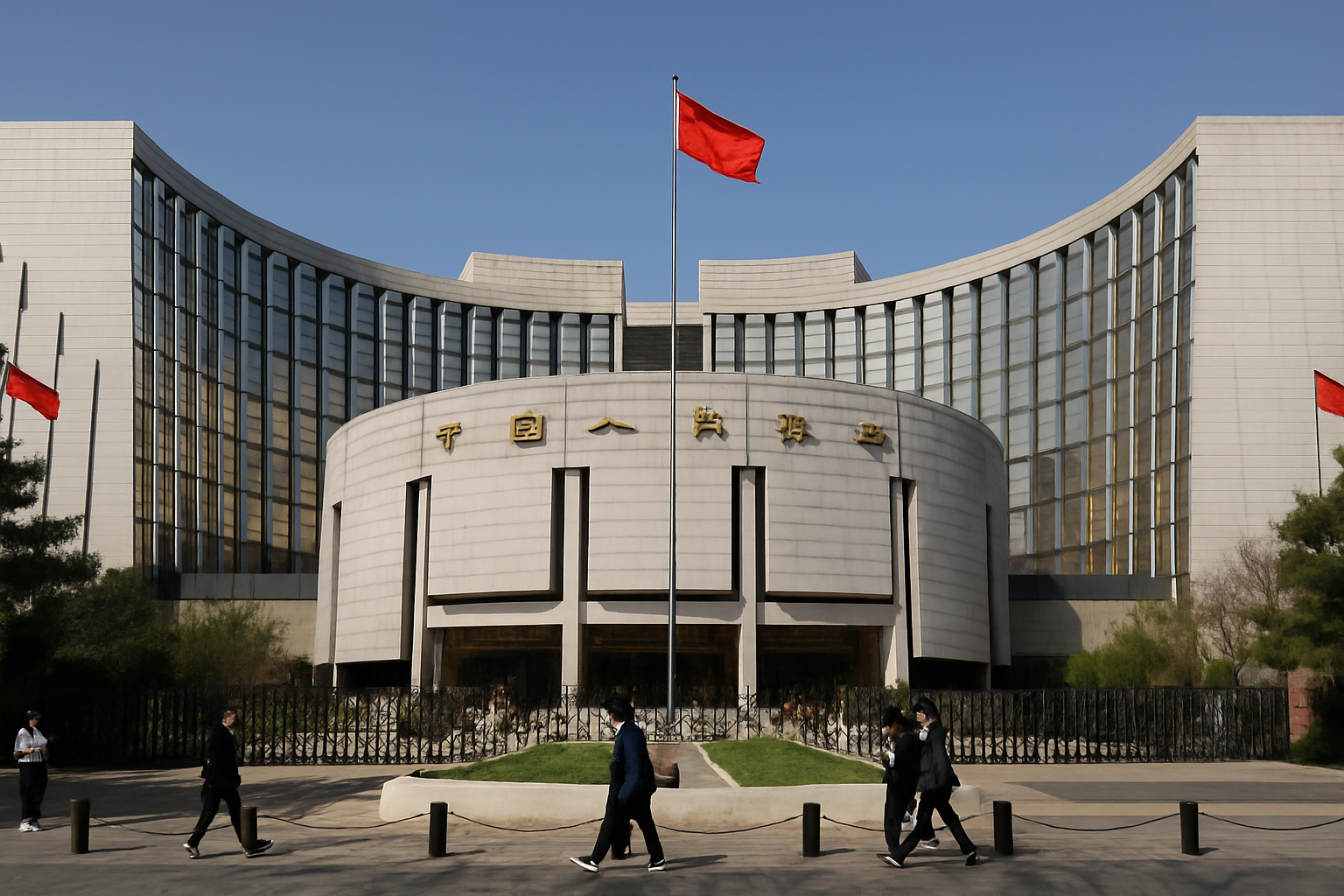
Beijing’s central bank said it was on guard against a “herd effect” in the foreign exchange market as the onshore yuan extended gains, marking a notable shift in public rhetoric that signals closer scrutiny of one‑direction speculative flows while maintaining support for broader economic stability.
New language, practical intent
The People’s Bank of China used the phrase "herd effect" in its quarterly Monetary Policy Committee statement released on September 25, 2026. The wording is the first time the central bank has explicitly singled out that form of market behaviour in a quarterly statement, a move market participants read as a warning against rapid, momentum driven capital flows that can create disorderly price moves.
That caution comes against a backdrop of a stronger yuan. The onshore currency has moved noticeably firmer in recent weeks, supported by firm export receipts and steady foreign exchange conversion flows. Policymakers face the technical task of preserving a stable exchange rate while avoiding abrupt policy reactions that could undermine market confidence.
Why regulators are watching
Rapid one‑way bets can amplify volatility. When a currency begins a sustained move in one direction, momentum players and leveraged strategies can exacerbate the trend, making it harder for a managed exchange rate regime to steer outcomes. By calling out herd behaviour, authorities are signalling they may lean more heavily on guidance, daily fixing management and short‑term operations to reduce the scope for speculative outruns.
That does not mean a return to strict depreciation controls or a one‑size‑fits‑all policy. The PBOC reiterated that it will keep an "appropriately loose" stance to support the economy, while stepping up countercyclical adjustments and expanding the use of structural tools aimed at smoothing liquidity and credit access. The juxtaposition of support for growth and vigilance in the FX market underlines the balancing act that Beijing has pursued since the global monetary cycle diverged sharply earlier this year.
Market reactions and spillovers
Short term, the statement is likely to temper a subset of speculative flows that bet solely on continued yuan appreciation. That could reduce demand for long yuan positions from global macro funds and algorithmic players, resources that often amplify runs. For exporters and multinational firms, a firmer yuan raises competitiveness concerns, but the PBOC language suggests Beijing intends to keep appreciation gradual and manageable so as not to harm trade performance.
For fixed income markets the implications are mixed. A firmer yuan and stable onshore funding can ease rollover pressures for domestic borrowers and lower foreign investor hedging costs. If authorities successfully dissuade one‑way speculative bets without triggering a sharp reversal, Chinese government bond yields could see reduced volatility. Conversely, aggressive interventions to slow appreciation, if they were to materialize, would add uncertainty to offshore investor sentiment.
Global context matters
The PBOC comment arrives while advanced economy central banks continue to adjust policy, and global yields remain elevated. That external environment makes domestic currency management harder. Higher US Treasury yields increase the attractiveness of dollar assets, and at the same time any rapid yuan appreciation would draw scrutiny from trading partners and could complicate China’s export outlook. Beijing’s message seeks to thread this needle, discouraging crowd behaviour in FX markets while avoiding abrupt policy swings.
Why this matters for investors and the economy
For investors the central takeaway is that China is emphasising targeted, preventive measures rather than broad policy shifts. The explicit call to curb herd dynamics signals a willingness to use both market guidance and calibrated operations to hold orderly markets. That should reduce the probability of a sudden policy pivot, but it also raises the bar for strategies that rely on unidirectional, momentum driven gains in the yuan.
For the real economy, the PBOC’s approach aims to preserve the benefits of a firmer currency, including lower import costs for energy and commodities, while limiting the disruptive effects of speculative swings that could spill into credit and equity markets. The central bank framed the stance as part of a larger goal: to maintain steady growth and moderate inflation pressures through a combination of aggregate easing and structural supports.
What to watch next
Markets will watch several tangible signals to gauge how the PBOC intends to operationalize its warning. Those include the daily central parity fix, volumes of short‑term open market operations, use of reserve requirement ratio adjustments and the pace of structurally targeted lending. Offshore demand for onshore bonds and the flows into RMB clearing accounts will also be closely tracked as indicators of whether the PBOC’s caution is taking hold.
In the near term, investors and corporates should prepare for more verbal guidance and measured interventions designed to reduce momentum driven volatility, rather than abrupt, large scale policy swings. That calibrated posture seeks to protect China’s recovery trajectory while preventing market froth from becoming a source of instability.
As the global rate environment continues to evolve, Beijing’s attempt to manage FX expectations without derailing growth will be a central theme for markets interacting with the Chinese economy in the months ahead.